How Online Communities Are Redefining Modern Digital Culture
Real-World Impact: When Digital Communities Reshape Offline Life
Online communities influence real-world fashion, language, career choices, dating norms and lifestyles by shaping shared values and behaviors. Hyperlocal scenes adopt aesthetics and behaviors discussed at length in digital spaces. Support mechanisms address concrete life challenges members face. Geographic moves increase when people seek physical proximity to online peers. Professional trajectories shift after exposure to alternative models. Particularly telling are hyperlocal and demographically precise communities. For instance, https://ladys.one/sv/sweden-malmo help thousands of women not only feel part of digital culture but also successfully integrate into a new reality, creating unique local cultural codes and practices of support. These groups function as the new primary institutions of socialization. They partially replaced churches, clubs and labor unions. 78% of Generation Z members state their core cultural identity takes shape inside online communities instead of school or family settings.
The Explosion of Digital Tribes
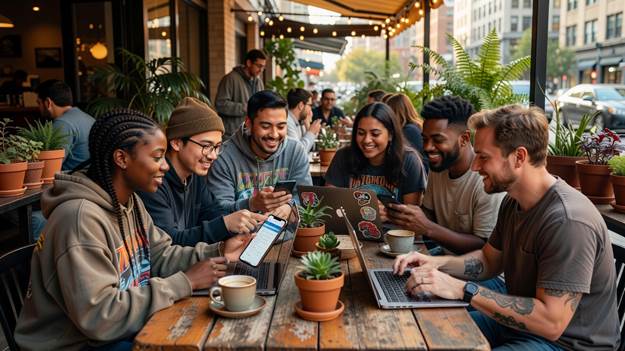
More than 60% of internet users joined at least one active thematic community by 2025 according to Statista and Discord data. Discord sustains over 200 million monthly active users across its servers. Reddit draws roughly 515 million weekly visitors. Facebook Groups engage nearly 1.8 billion people each month.
These figures mark a structural shift. Online communities no longer simply discuss culture. They create it.
Mechanisms of Cultural Transmission
Creators inside dedicated circles launch memes that cross into global recognition within weeks. Members coin slang terms that migrate to everyday speech. Groups codify social norms via sustained debate and enforcement. Niche concepts reach mainstream status faster than at any prior point in media history.
Context collapse occurs when private jokes achieve viral status outside their origin. Algorithmic amplification accelerates movement from obscure channel to widespread adoption. Cultural codes develop in tight circles then radiate outward to influence broader society. Cottagecore, dark academia, neotribalism, quiet quitting and multiple TikTok aesthetics all originated inside specialized groups during the last seven years.
From Global Platforms to Hyper-Specific Niches
Smaller circles now command greater cultural authority than massive networks. Depth consistently outperforms breadth in sustained influence and loyalty. Kevin Kelly’s 1,000 true fans concept finds renewed power in this setting. Creators sustain careers through one thousand deeply committed members in a precise niche more reliably than through millions of casual viewers.
Niche communities deliver eight to twelve times higher engagement and retention rates than large networks according to Harvard Business Review analysis. Participants contribute more actively and remain far longer. This focused energy explains why the most impactful cultural movements of recent years emerged from specialized spaces. The pattern underscores the growing advantage of precision over scale and prepares ground for concrete examples of influence.
The Double-Edged Sword: Polarization and Creative Renaissance
Echo chambers reinforce existing views with minimal external challenge. Cancel culture pressures conformity within certain circles. Tribalism fosters us-versus-them mentalities that spill into offline conflicts.
Creative output nevertheless surges inside supportive environments. Marginalized voices gain both amplification and practical resources. Subcultures experience genuine revival as participants reconnect with shared symbols and practices. Both dynamics operate simultaneously and resist simple moral conclusions.
The Future of Cultural Production
Artificial intelligence tools, Web3 protocols and decentralized systems will further accelerate community evolution in the years ahead. Groups will detach from reliance on major networks and establish self-governing digital nations together with invite-only circles that maintain their own rules and economies.
Culture will arise primarily through collective community effort rather than lone creators or corporate direction. Individual artists and large organizations will assume supporting roles at best. We move toward an era defined by digital tribes as the central producers of meaning, style and social norms.
Conclusion: Finding Your Digital Tribe
Conscious selection of online circles grows essential in this environment. The groups we join shape our language, values and daily opportunities in lasting ways. Hours spent inside these spaces determine much of our offline identity and trajectory. Choose deliberately who influences the culture you inhabit and help create.